
DMAIC process is the most widely used problem-solving framework in Six Sigma. It provides a structured approach for improving processes by reducing defects, variation, and waste.
DMAIC stands for:
- Define – Clearly define the problem and customer requirements.
- Measure – Understand the current process and collect reliable data.
- Analyze – Identify the factors that may be causing the problem.
- Improve – Implement and validate solutions.
- Control – Monitor the process to sustain the gains.

To see how the DMAIC process works in practice, let’s follow a simplified DMAIC project example involving a Ginger Ale bottling company. We will not cover the statistical tools behind each phase. Instead, we will focus on the main outcomes of each step so you can understand the essence of the DMAIC process before exploring the more advanced techniques.
DMAIC Project Example in Manufacturing: Ginger Ale Plastic (PET) Bottles
Step 1: Define Phase
One expectation customers rarely think about is that a plastic bottle should stand upright on a table.
However, customers were occasionally receiving Ginger Ale bottles with deformed bases. The bottles could wobble or fall over, creating a poor customer experience.
The quality team first reviewed historical quality records. Surprisingly, the bottle manufacturing process appeared to perform very well, with extremely low rates of defective bottles leaving the factory.
At first glance, it seemed possible that the bottles were being damaged somewhere in the distribution chain.
However, distributors handled Ginger Ale bottles in the same way as competing beverage brands, yet only the Ginger Ale bottles experienced this issue. This suggested that the root cause was likely connected to the manufacturing process itself.
After investigating customer complaints and examining defective bottles, the team identified a critical quality characteristic (CTQ): the thickness of the PET (polyethylene terephthalate) bottle base.
When the base plastic was too thin, it could deform under pressure. If it was too thick, there would not be enough plastic in other parts of the bottle. As a result, the bottle could bend or flex when someone picked it up, making it uncomfortable to hold and sometimes causing the drink to spill out accidentally.
Based on their investigation, the quality team defined the project goal as consistently producing bottles with a base thickness of 0.0177 inches (0.45 mm), with an acceptable variation of ±0.003 inches (±0.076 mm).
With the problem defined, the team moved to the Measure phase.
Step 2: Measure Phase
The objective of the Measure phase is to understand how the process currently performs and identify factors that may influence the CTQ.
A common Six Sigma concept is:
Y(Critical To Quality) = f(X)
In other words, the output (Y) is influenced by one or more inputs (X’s).
In our example:
CTQ (Y) = Bottle Base Thickness
The team developed a sampling plan and began measuring bottle thickness across production batches.

Based on the collected data, the team found that 1.2% of the bottles produced did not meet the specified thickness requirements.
They also created a process map of the bottle blowing operation to better understand each step involved in producing the bottles.
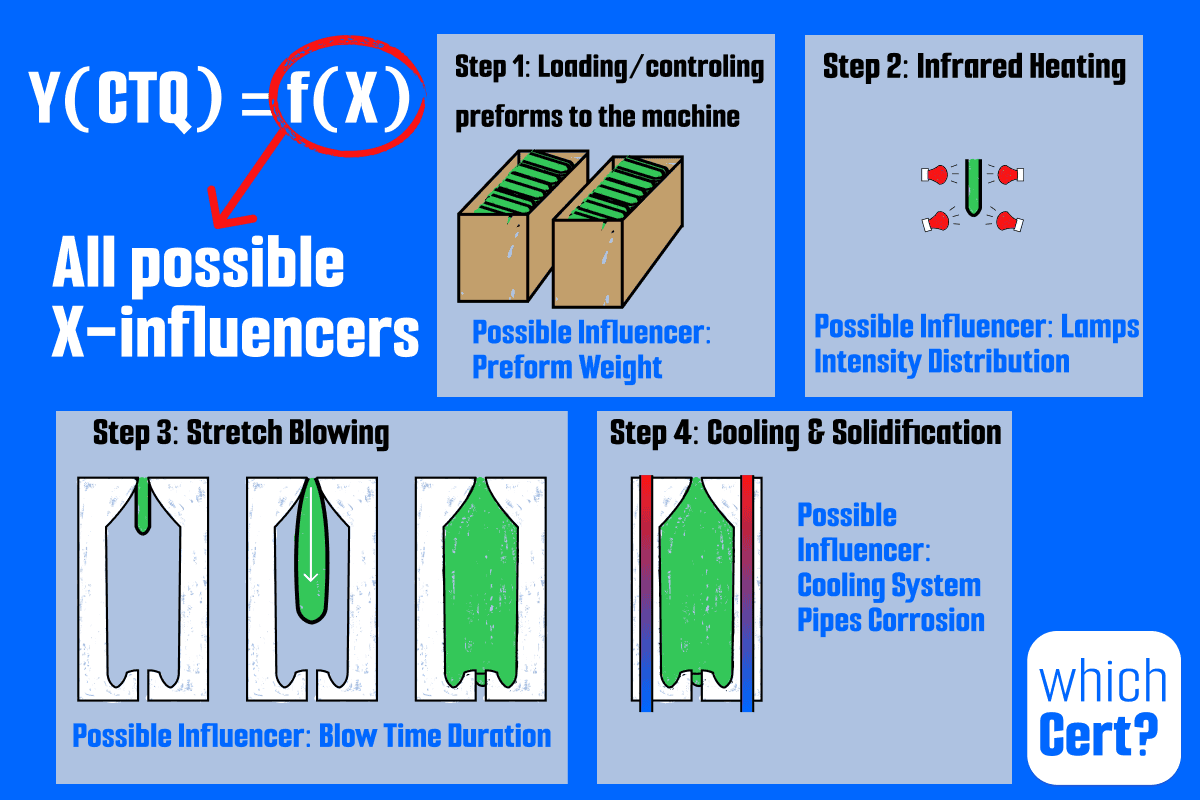
Bottle Blowing process:
- Verify the weight of the preforms before loading them into the bottle-blowing machine. Preforms are small plastic tubes, similar in shape to test tubes, that serve as the starting material for manufacturing PET bottles.
- Heat the preforms using infrared lamps. Different sections of the preform are heated to different temperatures to control how the plastic stretches during the bottle-blowing process.
For example, the neck and base of a plastic bottle are usually thicker than the middle section. Areas of the preform that are heated more will stretch more during blowing and become thinner, while cooler areas will remain relatively thicker. - The heated preforms are then placed into a mold shaped like the final bottle. High-pressure air is injected into the preform, causing the plastic to stretch and expand until it conforms to the walls of the mold.
This process gives the bottle its final shape, including the neck, body, and base design. - The bottle remains inside the mold while cooling water circulates through the metal mold. This removes heat from the plastic, allowing it to solidify and permanently retain its final shape.
By mapping the process, the team could identify potential variables that might affect bottle thickness and determine which factors deserved further investigation.
Step 3: Analyze Phase
At this stage, the objective is not to guess the cause of the problem but to systematically investigate possible causes.
The team used a Fishbone (Ishikawa) Diagram to organize potential causes into categories such as:
- People
- Machines
- Materials
- Methods
- Measurements
- Environment
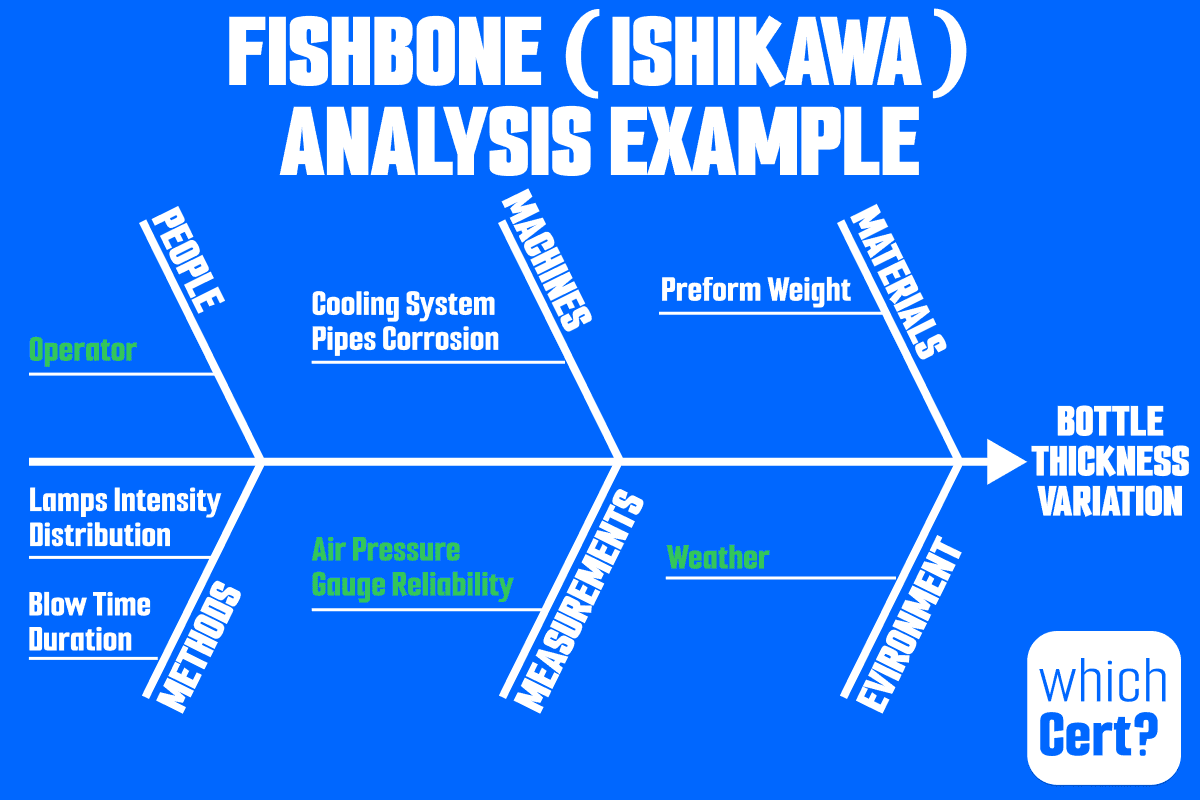
The Fishbone analysis helped the team identify several additional potential influencing factors, highlighted in green in the diagram, which were then investigated further.
Using the relevant statistical and analytical tools, the team investigated each potential cause. While we will not cover those tools in this example, this is one of the most important parts of a Six Sigma project, as it helps distinguish assumptions from facts. The team’s final conclusions were as follows:
Causes with no impact:
- Operator practices were consistent and followed standard procedures.
- Cooling system conditions did not explain the pattern observed in customer complaints.
- Infrared lamp settings strongly influenced thickness but were already centered around the target value.
- The air pressure gauge was calibrated and verified to be reliable. No measurement issues were identified that could explain the variation in bottle thickness.
- Blow time duration was also ruled out as a contributing factor.
Cause with only a minor impact was not prioritized for this project and may be addressed in future improvement initiatives:
- Although small variations in preform weight were observed, the analysis showed that they were not significant enough to affect bottle thickness.
The following factor was found to have the greatest impact on the problem and was therefore selected as the primary focus of this project:
- The weather or the ambient temperature.
The factory is located in an area where outdoor temperatures fluctuated significantly throughout the day. Although the facility is equipped with an HVAC system, the indoor temperature was still influenced by these external temperature changes. As a result, the heating phase of the bottle-blowing process became less consistent, introducing additional variation in bottle thickness.
Based on this analysis, the team proposed a solution: automatically adjust infrared lamp intensity according to ambient temperature conditions.
Step 4: Improve Phase
The proposed solution was implemented by upgrading the heating system with automatic compensation controls.
The new system continuously monitored ambient temperature and adjusted infrared lamp intensity accordingly.
After implementation, the team collected a new set of measurements.
The average bottle thickness remained close to the target value, but the spread of the measurements was significantly reduced.

Fewer bottles (less than 0.1%) were produced near the lower specification limit, reducing the likelihood of bottle base deformation after shipment.
The improvement phase confirmed that controlling ambient temperature effects reduced process variation.
Step 5: Control Phase
A successful improvement is only valuable if it continues over time.
To ensure the gains were maintained, the team developed a control plan.
The plan included:
- Statistical Process Control (SPC) charts to continuously monitor bottle thickness.
- Preventive maintenance checks to ensure stable machine performance.
- Defined response actions when unusual variation is detected.
If measurements begin showing signs of instability, operators follow a documented response plan before defects reach customers.
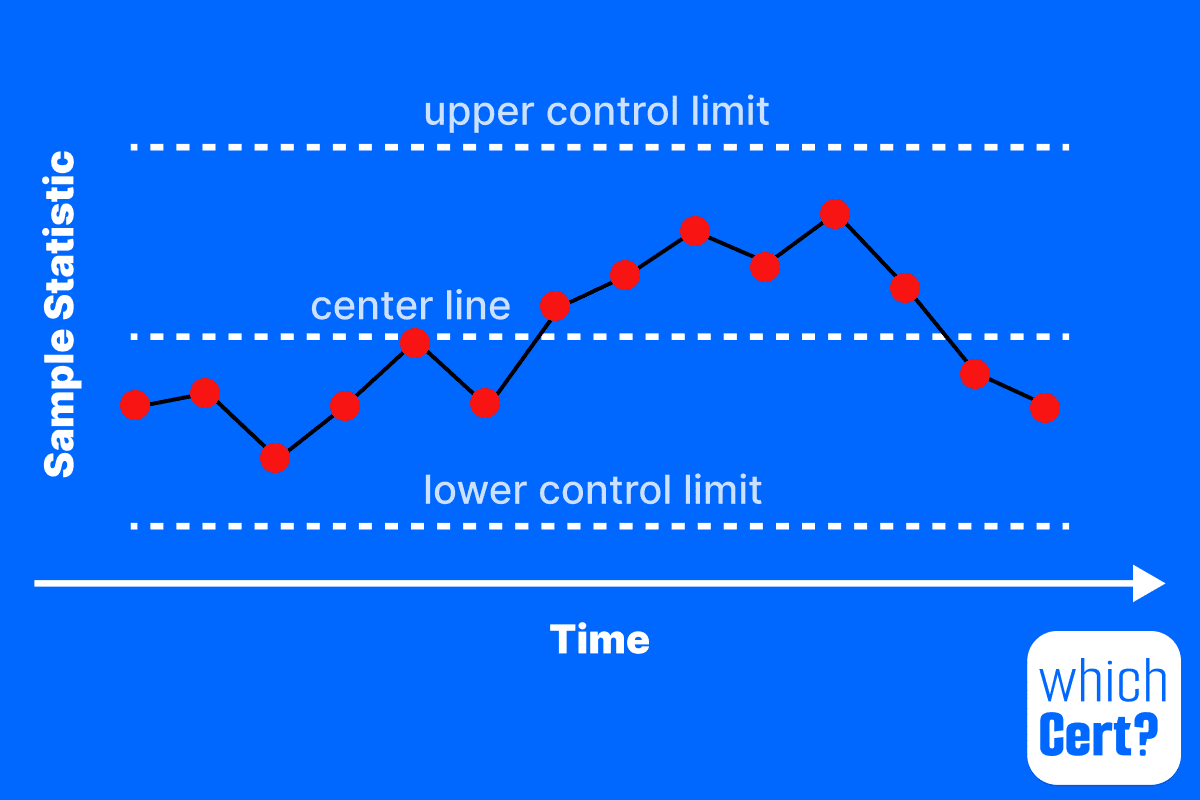
By continuously monitoring the process, the company can maintain the improvements achieved during the DMAIC project and prevent the problem from returning.
End Of the Example
Want to see what successful Six Sigma projects achieve in practice? Explore real-world Six Sigma project outcomes across industries.
But We Didn’t Reach Six Sigma Capability..
Yes, this example does not reach Six Sigma capability. To achieve Six Sigma performance, a process must produce only 3.4 defects per million opportunities, which is much stricter than the 0.1% defect rate in this case (about 1,000 defects per million).
Here, “opportunity” in Defects Per Million Opportunities (DPMO) means:
One chance for something to go wrong in a product or process.
It’s not just “one product” — it’s each possible defect point inside a product or process.
Simple example (Ginger Ale bottle case)
A bottle might have multiple “opportunities” for a defect, such as:
- Base thickness wrong
- Neck diameter out of spec
- Wall thickness uneven
- Leakage issue
- Shape deformation
So if one bottle has 5 possible defect points, then:
- 1 bottle = 5 opportunities
Why Six Sigma uses “opportunities”
Because different products have different complexity.
- A simple product → few opportunities
- A complex product → many opportunities
So instead of just counting defective units, Six Sigma standardizes it:
Defects per million opportunities = defects / (units × opportunities per unit)
What is Six Sigma Capability?
It was a strategic decision made by Motorola in 1986 to reduce the variability of every process, whether it delivered products or services, to a Six Sigma level.
When we measure critical-to-quality characteristics, many naturally take the familiar bell shape of the Normal distribution.
In fact, many things we measure in the world follow this pattern. The average height of men in Iowa, or the daily revenue of a supermarket in Lahore, can often be represented by this bell curve.
The Sigma (σ) symbol is a statistical representation of standard deviation, which is simply a way of measuring how spread out the data is around the average.
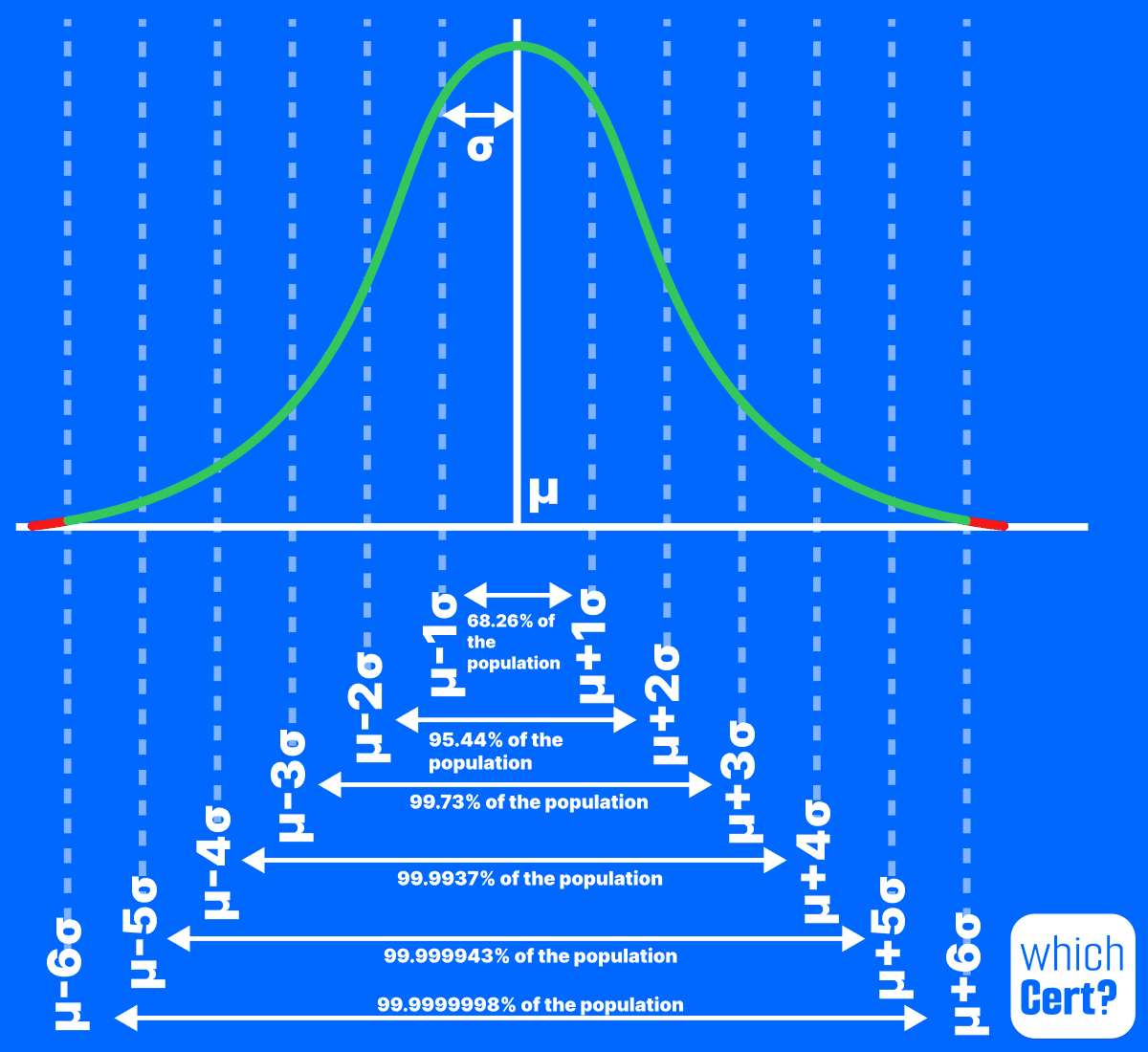
One sigma on each side of the average contains 68.26% of the population. This is the area where observations occur most frequently.
When we extend the range to ±3 sigma, we cover 99.73% of the population. That’s almost 100%, right?
For many industries, however, that is still not enough. The goal is to have the points μ – 6σ and μ + 6σ located within the specification limits. In other words, the process variation must be small enough that nearly all outputs fall within customer requirements.
When this happens, approximately 99.9999998% of the population falls within the limits.
Key Assumption: The process is centred!
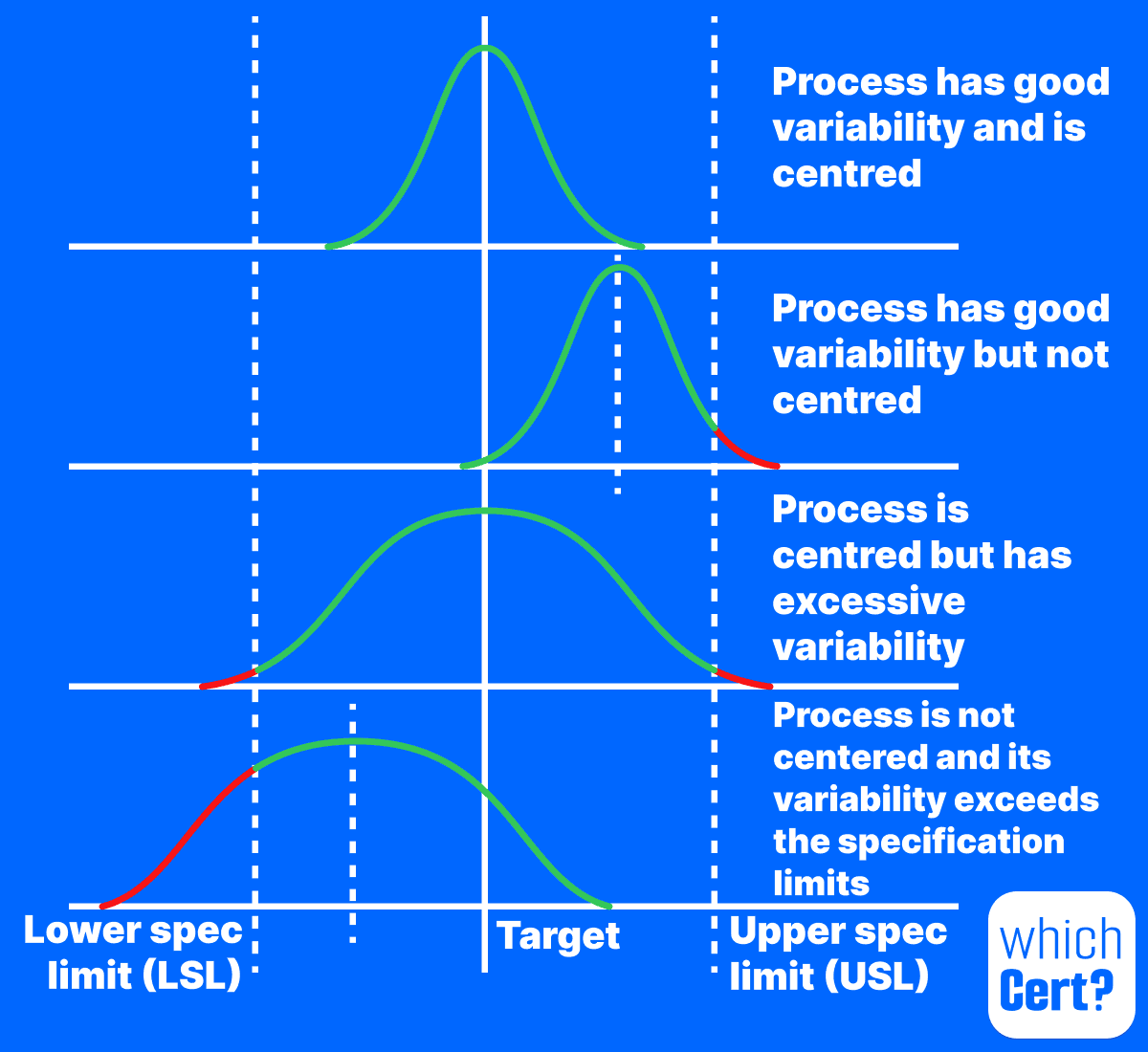
In some cases, reducing variability alone is not enough, and products or services may still fall outside the specification limits.
There are four possible cases:
- Process has good variability and is centred
- Process has good variability but is not centred
- Process is centred but has excessive variability
- Process is not centered, and its variability exceeds the specification limits
ILSSI’s Answers to Common Questions
I have emailed the International Lean Six Sigma Institute (ILSSI) with the following questions, and they kindly responded:
Q1: What Is a Six Sigma Project and What Is Its Relationship to DMAIC?
Six Sigma is a methodology that includes various principles, tools, and techniques for process improvement.
DMAIC is one of the main frameworks used within Six Sigma. Therefore, if you are using DMAIC, you are working within a Six Sigma framework.
Q2: What are the main principles of Six Sigma?
1. Reduce Variation and you will reduce Defects / Errors
2. Root Cause Analysis of problems (RCA)
3. Use Data for Decision making
4. Use of Statistical Analysis tools and charts
5. Process Optimization using Designed Experiments, Regression Analysis, Predictive Modelling and Hypothesis Tests
6. Improvement projects using the DMAIC Framework
If you’re looking for a specific certification level, explore our comparisons of White Belt (free), Yellow Belt, Green Belt, and Black Belt certifications across different providers to understand the differences in quality, recognition, project requirements, and overall value.
Final Thoughts
DMAIC is a structured problem-solving methodology that helps organizations improve processes by reducing variation and eliminating the root causes of defects. Rather than relying on assumptions, DMAIC encourages teams to use data and facts to understand problems, implement effective solutions, and sustain improvements over time.
Whether applied in manufacturing, healthcare, finance, or services, DMAIC provides a clear roadmap for achieving better quality, higher customer satisfaction, and more consistent process performance.
Since DMAIC projects still need to be planned and led like any other project, it’s worth seeing how Lean Six Sigma compares to PMP, Agile, and Scrum.
Want a clearer picture of how Lean and Six Sigma differ? Read our practical Lean vs. Six Sigma comparison.