
Quality Engineering jobs usually require a degree or specialization in the main domain of what the business is producing.
In the pharmaceutical industry, a degree in biology is important. However, in an automotive factory, a degree in mechanical engineering is highly valued for quality professionals.
Does that mean that quality discipline is specific to each domain and there is no clear pattern?
Of course, knowledge of the business processes is important and distinct but the tools for quality professionals are the same.
Hence, in this article, I am going to list the best quality engineer certifications. Those certifications are the credentials that are universal for quality practitioners regardless of their domain.
Quality professionals include (non-exhaustive list):
- Quality Engineer
- Quality Manager
- Quality Assurance Specialist
- Quality Auditor
- Process Improvement Specialist
- Continuous Improvement / OpEx Specialist
Advanced Quality Engineering Certifications
The Certified Quality Engineer (CQE) is the broad umbrella at the top of quality certifications.
It covers a large number of topics, including Lean Six Sigma, Design for Six Sigma and other topics that can be covered in ISO 9001 certification for professionals.
The American Society for Quality (ASQ) version of this certification has prerequisites of 8 years of on-the-job experience in quality engineering including 3 years in decision-making positions
ASQ may waive some years of experience depending on your degree.
You can prepare for the certification using the handbook and study guide:
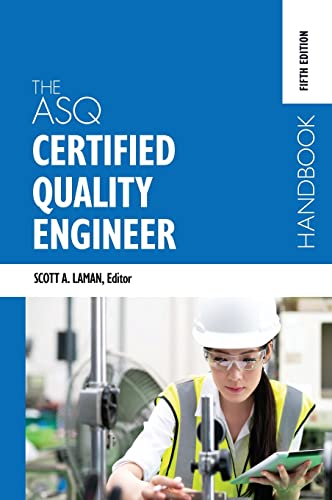
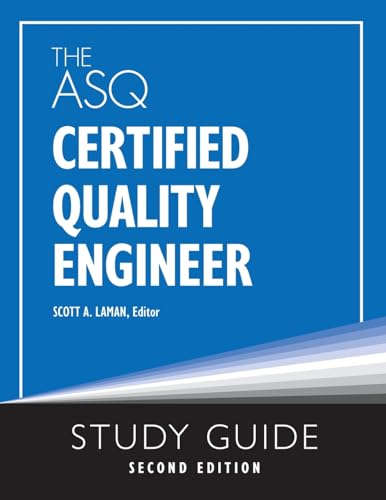
The International Lean Six Sigma Institute (ILSSI) version of this certification is called “Certified Quality Professional” and it doesn’t have prerequisites, which makes it more accessible than ASQ
The Management and Strategy Institute (MSI) offers the Process Improvement Excellence (PIEx) certification.
The PIEx program provides a complete learning pathway that guides candidates through four of MSI’s certifications: Certified Continuous Improvement Manager (CCIM), Six Sigma Lean Black Belt Professional (LBBP), Lean Six Sigma Master Black Belt Certified (LSSMBB), and Change Management Specialist (CMS)
Who should get it:
Experienced quality professionals who have hands-on experience in Lean Six Sigma and Total Quality Management.
Intermediate Level Continuous Improvement Certifications
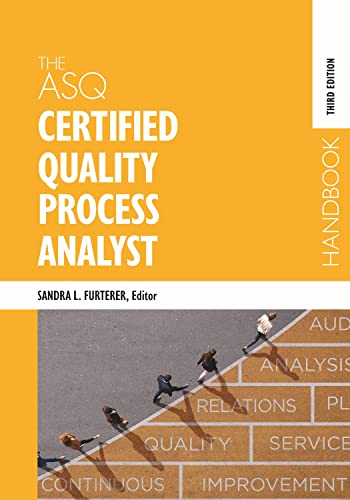
If you are not yet ready to become a Certified Quality Engineer or Professional, and you still want to get a generalist credential in quality engineering, I recommend preparing to become a Certified Quality Process Analyst (CQPA).
This certification is offered by the American Society for Quality (ASQ) and covers statistical quality tools for analysis, including the Lean Six Sigma toolkit.
Earnings Disclosure: As an Amazon Associate, I earn from qualifying purchases.
I also recommend the Continuous Improvement Manager Certification from the Management and Strategy Institute (MSI). It covers Lean, Six Sigma, TQM, and 5S principles.
The certification from MSI is much more accessible and affordable than CQPA from the ASQ.
Who should get it:
Beginners who want a horizontal development within the quality discipline.
Lean Six Sigma Certifications
The most popular certification path in quality engineering offers different certification levels represented by belt colors.
People who want a general insight into Lean Six Sigma can get the White or Yellow Belt.
Once you decide to move forward, you should choose the Green Belt level or the Black Belt (with lightweight programs).
Which Six Sigma certification does employers recognize most? [Read our answer]
The curriculum will teach you Lean principles inspired by the Toyota Production System to reduce wastes: defects, waiting, transportation, etc.
And with Six Sigma, you’ll learn statistical tools that help reduce variability in the processes and hence reduce defects.
5 Best Lean Six Sigma Green Belt Certifications in 2026
The Green Belt is the most in-demand level of certification in Lean Six Sigma, reflecting…
Best Lean Six Sigma White Belt Certification (Free)
Practically, there is no free Lean Six Sigma certification except the Lean Six Sigma White…
5 Best Lean Six Sigma Yellow Belt Certifications in 2026
The best Lean Six Sigma Yellow Belt certification doesn’t just give you a document—it equips…
4 Best Lean Six Sigma Black Belt Certifications in 2026
I can’t recommend a Lean Six Sigma Black Belt certification without emphasizing the importance of…
Who should get it:
Students or professionals who want to distinguish themselves with the most important toolkit in quality engineering.
Lean Management Certifications
Lean management is closely connected to quality engineering because many quality professionals work on eliminating waste, improving process flow, standardizing work, and increasing process efficiency. While Lean is often combined with Six Sigma, standalone Lean certifications can be a useful option for professionals who want to focus specifically on Lean principles and tools.
If you are looking for a certification focused specifically on Lean management rather than a broader quality credential, see our guide to the Best Lean Management Certification in 2026, where we cover standalone Lean certifications, belt-based programs, and certifications focused on specific Lean tools.
Who should get it:
If your industry doesn’t use Six Sigma and you need quality tools.
Lean cuts waste, Six Sigma cuts variation. For the full picture, see: Lean vs Six Sigma: What’s the Difference?
ISO 9001 Implementer Certification
Unlike Lean and Six Sigma, ISO 9001 is a standard for Quality Management Systems (QMS).
This standard contains requirements on how the Quality Management System has to be structured.
In Lean Six Sigma, you focus more on processes that create products or services for customers.
But the QMS aims to create, for all the processes of the company, the right environment to ensure that they are able to deliver quality products or services. This approach is called Total Quality Management (TQM).
ISO 9001 doesn’t dictate how, but what to do. It lets you have the freedom to choose how to be compliant with its requirements, which is why I consider it less technical and more managerial and administrative compared to Lean Six Sigma.
A QMS can be certified against ISO 9001, but the standard itself is not a certification for people. Still, there is an ISO 9001 Implementer certification for professionals who want to show they can implement a QMS that conforms to the standard within an organization.
Who should get it:
If you are creative and passionate about translating written requirements into practical actions.
ISO 9001 Auditor Certification
This certification is governed by popular organizations such as CQI IRCA and Exemplar Global (formerly RABQSA).
These organizations have partners that deliver trainings and certification exams worldwide.
Auditor certifications have two different credentials.
One for lead auditors:
This certification can open a high-income opportunity as an independent auditor. If you work with a certification body, you’ll be assigned to assess the conformity of your client’s QMS.
A second one for audit team members:
Auditor certification can qualify you to participate in internal audits for your Quality Management System (QMS) or the systems of your suppliers to qualify them.
Who should get it:
If you have attention to detail and you think you’d find it easy to understand written management systems and compare them both with a written standard and with its application in reality.
Project Management Certifications
Although quality engineering roles include some routine activities, the rest is project-based.
From ISO 9001 implementation to DMAIC, a quality professional will have to lead a project one day.
Although project management has different types of certifications, most of them are popular in software development; I recommend the following certifications depending on the case:
PMI Agile Certified Practitioner (PMI-ACP®)
Who should get it:
If you design new products or services using, for example, Design for Six Sigma, or by simply following the minimum requirements of clause 8.3 of the ISO 9001 standard, I highly recommend PMI Agile Certified Practitioner certification.
As product or service design has a lot of uncertainty, using waterfall (predictive) project management will create more stress than good management.
Project Management Professional Certification (PMP®)
Who should get it:
If you are not involved in design, PMP is the right certification, whether you are a quality professional, a process improvement specialist, or even an external advisor.
This certification covers both predictive and adaptive project management styles.
If you’re weighing Lean Six Sigma against project management, read our full comparison of PMP, Agile, Scrum and PRINCE2.
Final Thoughts
Although quality roles are connected to the organization’s industry, such as food, automotive, or healthcare, the fundamental quality tools and principles are common across industries.
This means that a quality professional can build a transferable set of skills through certifications in quality engineering, Lean Six Sigma, process improvement, auditing, and Quality Management Systems, regardless of the industry they work in.